
Summary
Compare construction, access and long-term upkeep instead of assuming one material is always best.
A sheltered garden on soil, a windy terrace and a narrow side passage place different demands on a bed. Measure the space and plan delivery access.

Start with the site
A sheltered garden on soil, a windy terrace and a narrow side passage place different demands on a bed. Measure the space and plan delivery access. Both wood and metal can work well when the structure is suitable; neither removes the need for drainage, a stable base and enough room to reach the plants.
What wood offers
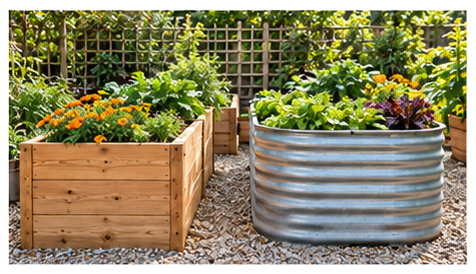
Timber has a warm appearance and can be straightforward to repair with replaceable boards. Its lifespan varies with species, thickness, moisture and construction. Inspect joins and any ground-contact areas over time. For food growing, buy material with a clear specification for that use; avoid unidentified reclaimed sleepers or timber with unknown treatments.
What metal offers
Metal kits can provide slim walls and modular shapes. Check the stated coating, edge protection, bracing and suitability for outdoor contact with soil. Poorly finished edges are a handling hazard. Exposed metal can become hot in strong sun, although root-zone conditions also depend on soil volume, watering and placement. Compare the complete system rather than the colour alone.

Compare the whole cost
The frame is only part of the purchase. Include delivery, fixings, base preparation, fill, irrigation and possible liners. A taller bed needs more fill; an inexpensive frame may become expensive once everything else is included. Ask whether replacement panels or boards are available and whether you can assemble it safely with your tools.
Do not trap water with a liner
A liner may separate damp soil from timber, but it must not turn an open-bottom bed into a sealed bath. Follow the manufacturer's installation guidance and keep drainage functional. On a hard surface, use a design specifically intended for that setting. A makeshift plastic sheet is not a substitute for understanding where water will go.
Make a practical decision
Choose wood if repairability and a timber finish matter most and you accept upkeep. Choose a well-specified metal kit if a slim modular structure suits the space. In either case, prioritise accessible width, safe edges and suitable materials. Neither choice guarantees a better harvest: soil, light and care still do most of the work.