
Summary
A good irrigation setup delivers water where it is needed and remains understandable when something goes wrong.
Put plants with similar needs on the same watering zone. A tray of young seedlings and a large fruiting tomato should not receive identical treatment.

Group plants
before laying pipe
Put plants with similar needs on the same watering zone. A tray of young seedlings and a large fruiting tomato should not receive identical treatment. Check whether you are watering pots, grow bags or beds: container size and growing medium change how quickly water is used. Draw the layout and leave room to walk and inspect plants.
Match the system to the supply
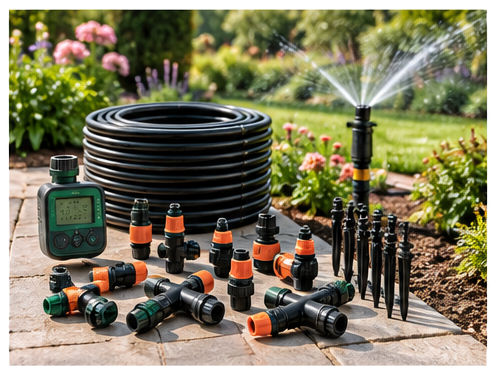
A mains tap, raised tank and pumped reservoir offer different pressure and flow. Choose equipment explicitly compatible with the source. Count emitters and check the supplier's operating limits rather than extending tubing indefinitely. Include the recommended filter and any required pressure regulator; dirt and excessive pressure can make a simple system unreliable.
Put water at the roots
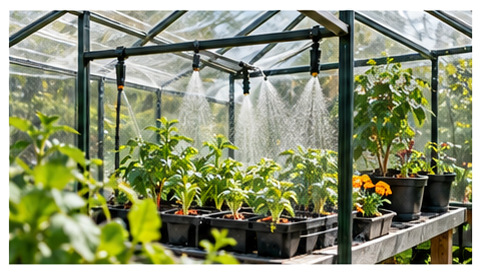
Secure emitters so they cannot fall outside a pot. Start with a short run, then check how far moisture has spread below the surface. A wet patch beside one dripper does not prove the whole root ball is watered. Adjust emitter placement and duration to the actual pots, and keep foliage dry where practical.

Test before trusting the timer
Run the system while you are present. Inspect joints, compare delivery into measuring containers and confirm every plant receives water. Repeat after the greenhouse warms up and crops grow. Check batteries, reservoir capacity and what happens after a power interruption. A timer controls a schedule; it does not automatically know whether a plant needs water.
Keep manual checks
in the routine
Open vents and manage shading as needed: irrigation cannot correct an overheated greenhouse. Recheck moisture during cloudy spells as well as hot weather. Clean blocked emitters and flush lines according to the equipment instructions. Keep a watering can available for exceptions and newly planted pots.
Prepare for an absence
Test the final settings for several days before leaving. Arrange a person to inspect the system if failure would cause a major loss. Leave a simple note identifying the shut-off and plants needing special attention. At the end of the season, drain or protect equipment as its manufacturer advises against freezing.