Summary
Formal design can offer clarity and rhythm even when your garden is measured in steps rather than hectares.
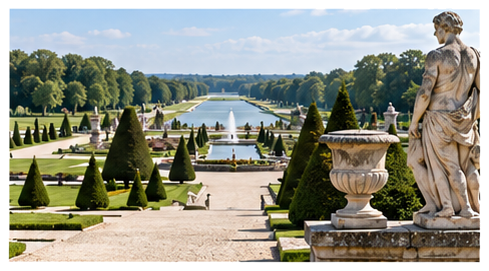
The palace and park of Versailles are inscribed on UNESCO's World Heritage List. For a visitor, a useful exercise is to identify the dominant view and the features that reinforce it.
Read the main line
The palace and park of Versailles are inscribed on UNESCO's World Heritage List. For a visitor, a useful exercise is to identify the dominant view and the features that reinforce it. You do not need to reproduce the historical plan to understand how alignment gives a large landscape visual order.
Scale the idea down
In a small garden, a clear line might run from the back door to a seat or a single well-chosen container. Keep the endpoint proportionate. An oversized focal object can make a tiny space feel crowded, while a clear path and a quiet background can let an ordinary plant become the focus.
Use repetition selectively
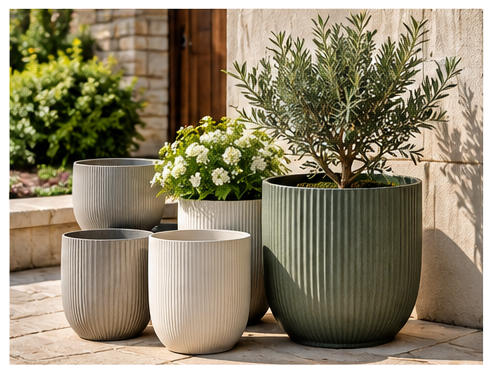
Repeat a shape, material or plant to connect different parts of the space. The repetition need not be perfect or expensive. Three containers with related proportions can provide more coherence than many unrelated ornaments. Choose plants suited to your conditions rather than copying a historic planting palette without checking its needs.
Balance structure
with maintenance
Clipped forms and crisp edges require work. Decide how often you can trim, sweep and replace plants before choosing a formal design. Low-maintenance structure can come from paving lines, a restrained container group or a small hedge suited to the site. Allow enough width to maintain both sides of any living boundary.
Check the actual
visit arrangements
Use the official Versailles website for current tickets, seasonal events, garden access and accessibility information. Different areas and event days can have different arrangements. Plan a route suited to your available time and mobility rather than assuming one visit must cover everything. Bring water and weather-appropriate clothing for outdoor walking.
Take home a design question
Ask what your own garden needs most: a clearer route, fewer competing materials or a better place to sit. Sketch two alternatives and mark them out before spending. The strongest lesson is restraint: structure is useful when it makes the garden easier to understand and enjoy, not when it adds unnecessary chores.